
Singapore Police Probe Racist Online Comments Targeting Indians—Shanmugam Warns: “They Should Be Unmasked”

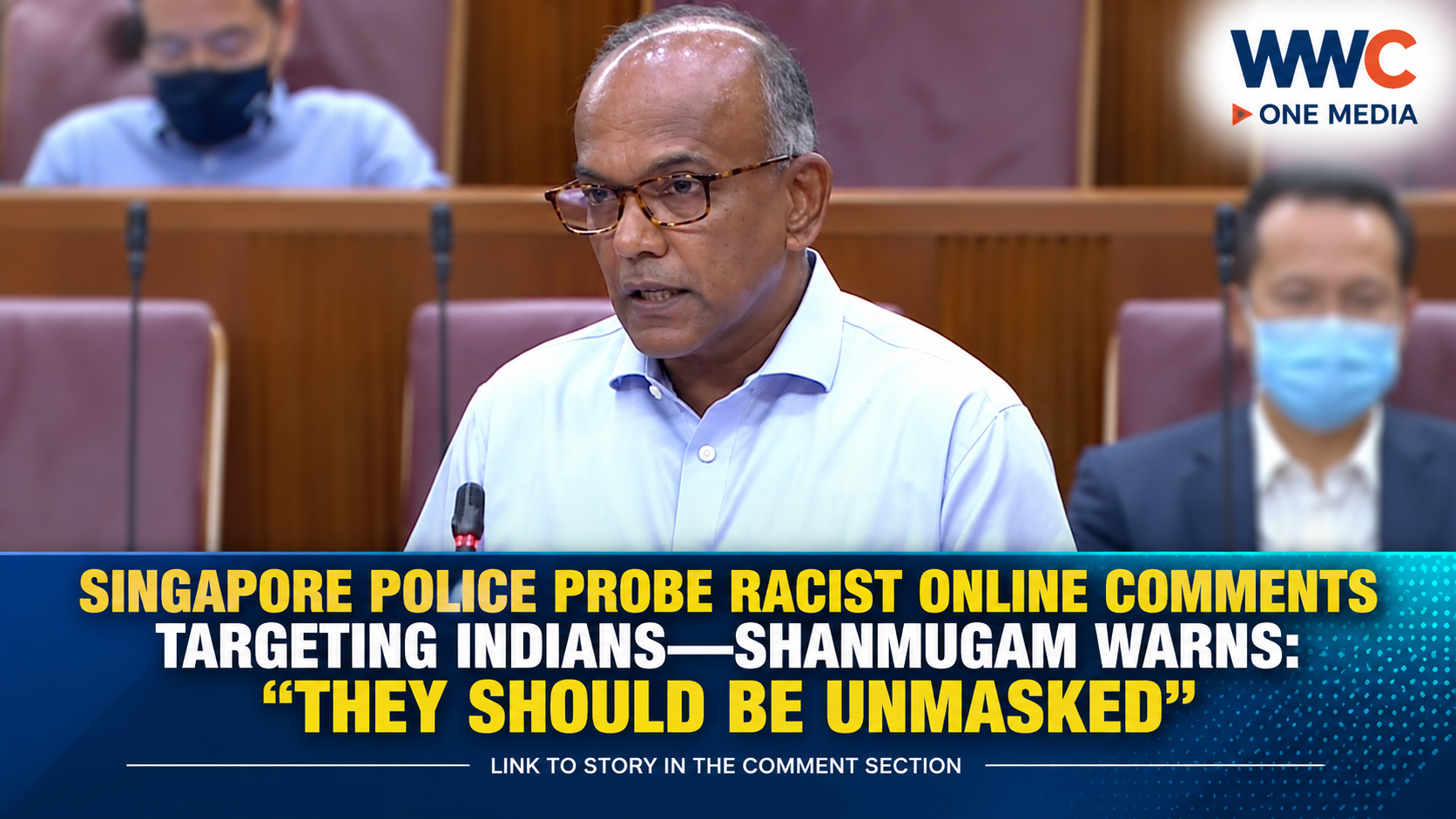
SINGAPORE — Singapore authorities are investigating a wave of racist and xenophobic comments posted online in connection with two unrelated developments: the deadly Nepal floods involving nine missing Singaporeans, and Singapore Airlines’ investment in financially troubled Air India.
Senior Minister and Coordinating Minister for National Security K Shanmugam said on Sept. 5 that the comments were “shameful,” “nasty” and unacceptable, warning that allowing racial prejudice to become normalised online could eventually damage Singapore’s social cohesion.
He said police are looking into the comments and that people who hide behind online anonymity should not assume they are beyond accountability.
Racist comments surfaced after Singaporeans went missing in Nepal
The controversy intensified after devastating flash floods struck along the Nepal-China border on Aug. 26.
Singapore’s Ministry of Foreign Affairs confirmed that nine Singaporeans remain missing and that its Crisis Response Team has been working with Nepalese authorities and the affected families.
Instead of focusing solely on the humanitarian disaster, some online users posted comments questioning whether the missing people were “Singaporean enough,” according to Singapore media reports.
Shanmugam condemned such remarks, particularly comments that appeared to distinguish between Singaporeans based on ethnicity or their background.
The Singapore Government has meanwhile provided humanitarian assistance to Nepal worth about S$560,000, including medical supplies, DNA testing kits, personal protective equipment and specialised equipment for search, recovery and disaster victim identification. Singapore had also earlier contributed US$100,000 to Singapore Red Cross fundraising efforts.
The response highlights the sharp contrast between the official humanitarian effort and the hostile rhetoric appearing in parts of social media.
Air India controversy becomes another flashpoint
The second source of the online backlash is Singapore Airlines' involvement in Air India.
Air India has sought approximately US$1.5 billion in fresh equity from its owners, Tata Sons and Singapore Airlines, after Air India and Air India Express recorded combined losses of about US$2.33 billion for the financial year ending March 2026. Discussions over the proposed funding were still ongoing, and no final decision had been announced when Reuters reported the request.
Singapore Airlines owns approximately 25.1% of Air India, with Tata holding the remaining stake.
The financial difficulties triggered political and public scrutiny in Singapore, including questions over whether Singapore-linked capital should be used to support the Indian carrier. Opposition Workers’ Party MP Kenneth Tiong has argued that Temasek funds should not be used to shore up Air India through Singapore Airlines.
But the financial debate subsequently spilled into racial territory.
Shanmugam said some online attacks targeted people connected to the investment simply because of their Indian ethnicity rather than because of the commercial merits of the deal. He specifically defended Temasek CEO Dilhan Pillay Sandrasegara, who has also been targeted online.
The minister stressed that Pillay was born and educated in Singapore and that investment decisions should not be judged according to a person's race.
Singapore says commercial decisions cannot be reduced to ethnicity
Shanmugam's intervention also comes amid a broader debate over the role of Temasek and Singapore Airlines in Air India's turnaround.
Temasek has backed SIA's investment from a long-term strategic perspective, while SIA has said its board would carefully assess any request for additional capital against the airline group's other needs and Air India's business strategy.
Shanmugam separately argued that companies such as Singapore Airlines and Temasek must be able to make commercial decisions without political or racially motivated pressure.
His warning is significant because Singapore's investment model relies heavily on professional management of state-linked companies and investment portfolios.
He argued that if corporate boards become afraid to make decisions because they could face politically or ethnically charged attacks, they could become excessively cautious—potentially damaging investment returns over the long term.
This is not Singapore's first battle with online racial content
The latest controversy follows a much broader crackdown on inflammatory online material targeting Singapore's Indian community.
In June, Singapore authorities ordered social media platforms to restrict access to 14 posts that were assessed to contain inflammatory narratives targeting Indians and undermining Singapore's multiracial model.
The Ministry of Home Affairs said the material likely originated from a China-based platform before spreading elsewhere online. Authorities assessed that the content could constitute an offence under Section 298A of Singapore's Penal Code, which covers conduct promoting enmity, hatred or ill-will between racial groups or acts prejudicial to racial harmony.
The authorities also used disabling directions under Singapore's Online Criminal Harms Act to restrict access to the posts.
Importantly, authorities said at the time there was no evidence that the material was coordinated by a government, even though investigations indicated that it likely originated overseas.
That earlier episode provides important context for why Singaporean officials are treating the latest racist comments seriously.
The online environment is becoming another front in Singapore's racial-harmony policy
Singapore has long placed racial and religious harmony at the centre of its domestic policy, given its multi-ethnic population.
Shanmugam warned that racism can become more dangerous when repeated online.
His concern is not simply about offensive comments themselves, but about the possibility that repeated stereotyping could gradually become accepted as normal public discourse.
That is why he said authorities should act before such rhetoric moves from fringe online spaces into mainstream political or community conversations.
The government's position is also being reinforced by recent efforts to tackle misinformation and manipulated content.
Just days before Shanmugam's remarks, Singapore's authorities and social-media platforms were dealing with AI-generated images falsely depicting Singaporeans missing in the Nepal floods. TikTok removed a widely viewed post after it was found to contain generated images that could mislead users. The post had reportedly attracted more than 150,000 views before removal.
That means the Nepal disaster has generated two separate online problems: misinformation involving fabricated images and racist commentary targeting victims or their backgrounds.
WWC ONE MEDIA M.J.E