
Singapore’s Secret Intelligence Agency Is Opening Up—But What Is It Really Protecting From Public View?

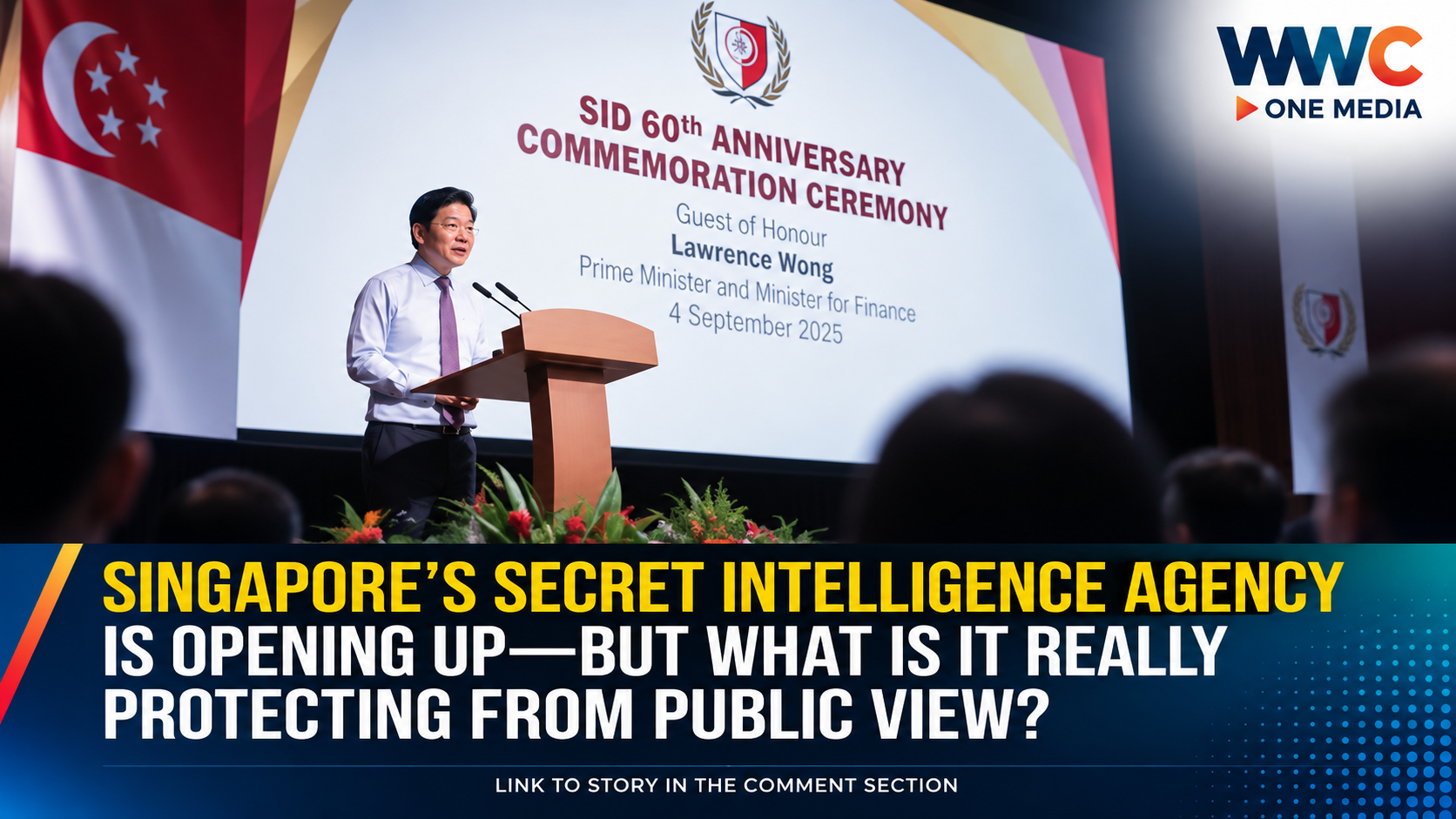
SINGAPORE — It operates largely away from the public spotlight, deals with information that can affect national security and has historically revealed little about its operations.
But Singapore’s Security and Intelligence Division (SID) is no longer quite as invisible as it once was.
The agency has been gradually providing the public with more information about its mission, history and recruitment—offering a rare glimpse into one of Singapore’s most closely guarded government organisations.
The Security and Intelligence Division, which operates under Singapore’s Ministry of Defence (MINDEF), is the country's external intelligence agency. Its stated mission is to protect Singapore from external threats and advance the nation's interests.
What exactly does Singapore’s SID do?
Unlike Singapore's Military Security Department (MSD), which focuses on counter-intelligence and internal security within MINDEF and the Singapore Armed Forces, SID is focused primarily on threats and developments originating outside Singapore.
According to MINDEF, SID provides intelligence and assessments to government agencies, supports deliberations on international and strategic issues, and analyses developments around the world that could affect Singapore's security and national interests.
Its work covers areas including geopolitics, foreign relations, terrorism and cybersecurity. The agency also works with foreign intelligence and security organisations to exchange information and insights on transnational threats.
That distinction is important: SID is not simply Singapore's military intelligence arm. It is an external intelligence organisation with a broader national-security mission.
A secret agency with a history dating back to 1966
SID was established in 1966, shortly after Singapore's independence.
Singapore's newly formed government recognised the need for its own external intelligence capability, and the organisation was initially established under the then-Ministry of Interior and Defence.
When Singapore subsequently separated its interior and defence functions into separate ministries, SID moved under MINDEF in 1970 and continued focusing on external threats.
Its history includes some episodes that have become public decades later.
One of the most notable involved the 1974 Laju incident, when terrorists hijacked the ferryboat Laju and took its civilian crew hostage. Then-SID director S. R. Nathan played a role in Singapore's response and negotiations. Nathan would later become President of Singapore.
Much of its work never becomes public
The nature of intelligence work means that a large portion of SID's activities remains classified.
That secrecy is not necessarily unusual for an intelligence service. Intelligence organisations depend on protecting sources, methods, relationships and assessments that could be compromised if publicly disclosed.
Nevertheless, Singapore has publicly acknowledged some of SID's contributions.
Following the September 11 attacks, the agency became increasingly involved in counter-terrorism efforts. MINDEF says SID worked with Singapore's other security agencies in efforts involving Jemaah Islamiyah terrorists who had fled Singapore and helped establish the Joint Counter-Terrorism Centre in 2004.
SID also supported efforts in 2016 to disrupt a terror group's plot targeting Marina Bay Sands, according to MINDEF.
These cases illustrate why intelligence agencies often operate before the public ever hears about a threat.
Why is Singapore making SID more visible?
Perhaps the most intriguing development is that the traditionally secretive organisation has begun deliberately increasing its public profile.
In 2021, MINDEF announced that SID had launched an official website designed to give Singaporeans greater insight into its role while helping the agency recruit people with diverse skills and backgrounds.
That effort has continued.
SID's current public-facing material openly describes career paths ranging from intelligence work to specialised professional and corporate roles. The agency says it wants people from different backgrounds and does not require applicants to come from a particular academic discipline.
Its recruitment information also makes clear that applicants must be Singapore citizens and undergo extensive assessment and security vetting.
Intelligence work is not quite what movies suggest
SID itself pushes back against some popular assumptions about intelligence careers.
Its recruitment material says officers can tell close and trusted family members where they work, while maintaining appropriate discretion about sensitive matters. The agency also says employees can leave the organisation and that it recruits both fresh graduates and mid-career professionals.
The message is revealing: modern intelligence work requires more than traditional espionage skills.
The agency's public information highlights analytical abilities, specialised expertise, adaptability and the ability to work across different areas of the intelligence cycle.
Singapore's changing security environment
The push to develop intelligence capabilities comes as Singapore faces a security environment that is increasingly difficult to predict.
Traditional geopolitical tensions now intersect with terrorism, cyber threats, technological competition, disinformation and rapidly changing international relationships.
For a small and highly connected country, developments occurring thousands of kilometres away can potentially have consequences at home.
That makes early warning particularly important.
SID describes itself as protecting Singapore against external threats, while its historical account characterises the organisation as a first line of defence for the country's security.
And that may explain the paradox surrounding the agency.
The more effective an intelligence service is at preventing a threat, the less likely the public is to ever know that the threat existed.
The bigger picture
Singapore's SID remains one of the country's least publicly understood security organisations.
What is known, however, paints a picture of an agency whose role extends well beyond traditional spying. It collects and analyses information, provides assessments to decision-makers, works with international partners and seeks to identify external threats before they become problems for Singapore.
Its increasing public visibility does not mean the agency is abandoning secrecy.
Instead, it appears to be drawing a carefully controlled line between explaining what it does and revealing how it does it.
And that may be the most important thing to understand about Singapore's secret intelligence service: the information made public may tell us what SID's mission is—but the most sensitive details of how that mission is carried out are still deliberately kept out of sight.
WWC ONE MEDIA M.J.E