
Thailand’s HIV Cases Surpass 500,000, With Young People Emerging as a Growing Concern

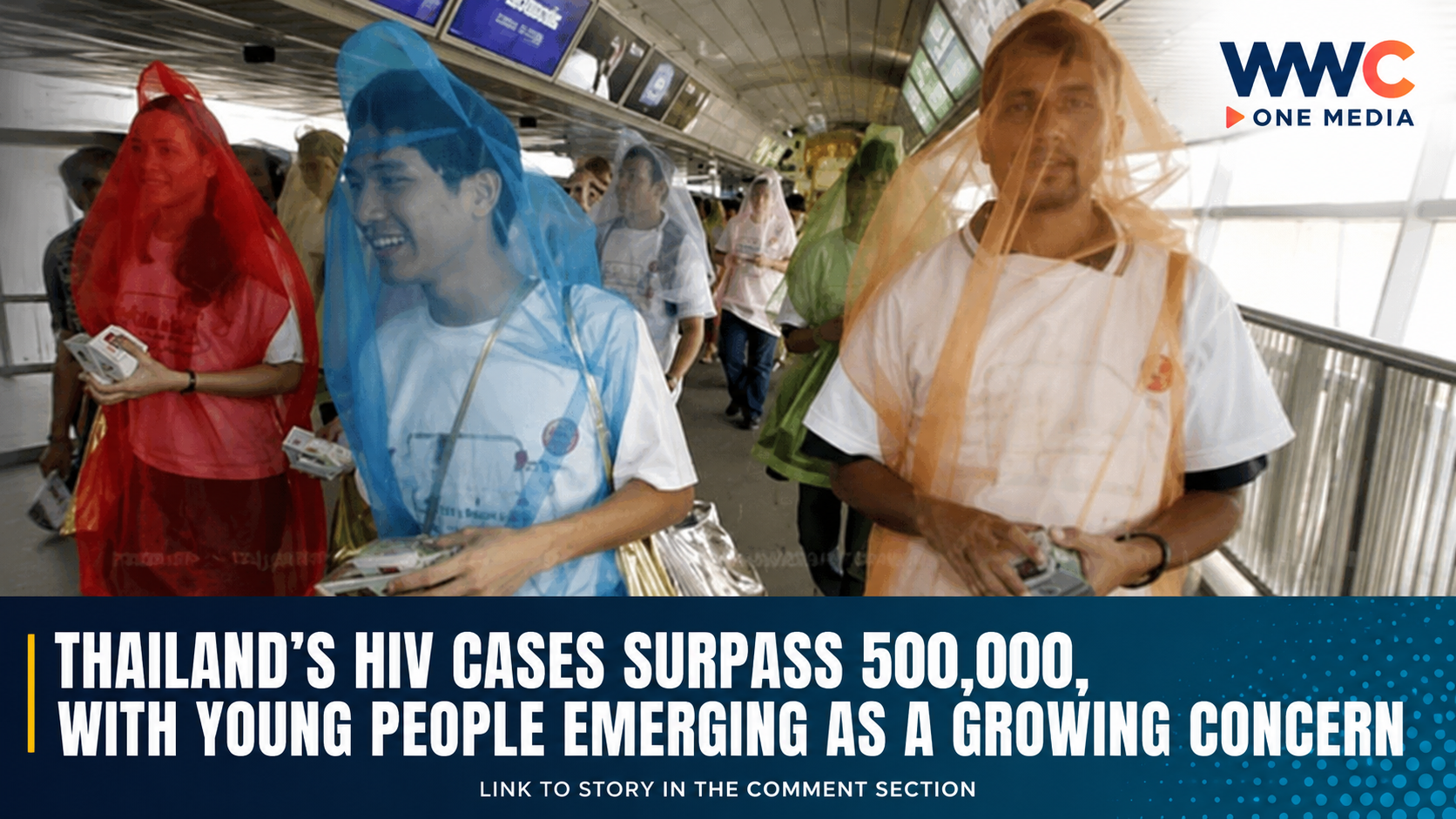
BANGKOK — Thailand has recorded more than 500,000 cumulative HIV cases, with health experts increasingly concerned about infections among young people as the country confronts a changing phase in its decades-long battle against the virus.
Data reported for the 2026 fiscal year through the third quarter showed that Thailand's HIV burden remains significant, with Bangkok recording the country's highest cumulative number of cases. Young people aged 15 to 24 have emerged as a particularly vulnerable group, prompting renewed calls for better sexual health education, wider testing and stronger access to prevention services.
The figures, however, require important context.
The more-than-500,000 figure represents cumulative cases recorded over many years, not half a million newly infected people in a single year. Thai health experts have warned against interpreting the number as a sudden nationwide surge.
Recent estimates cited by Thai health sources suggest the country continues to record thousands of new HIV infections annually, even as treatment programs have dramatically improved survival and reduced transmission risks.
Youth Infections Raise Alarm
The growing concern centers on Thailand's younger population.
Reports from Thai health authorities indicate that people aged 15 to 24 account for a disproportionately significant share of new infections. Earlier reporting this year cited approximately 3,900 new infections annually among young people, out of roughly 8,000 new HIV cases nationwide in the referenced period.
That means youth infections remain a major obstacle despite Thailand's overall progress against HIV.
UNAIDS data also illustrates the challenge. Thailand saw an estimated 4,200 new HIV infections among people aged 15 to 24 in 2023, demonstrating that younger populations continue to account for a substantial portion of new transmissions.
Health advocates have increasingly pointed to gaps in sexual health education, inconsistent condom use, stigma surrounding HIV testing and limited access to prevention services as issues requiring continued attention.
Bangkok Remains the Largest Hotspot
Bangkok has recorded the highest cumulative number of HIV cases in Thailand, followed by provinces including Chon Buri and Chiang Mai, according to recently reported fiscal-year data.
The concentration of cases in major urban and economically active areas reflects the complex nature of Thailand's epidemic, which varies significantly between regions and populations.
But experts caution that focusing exclusively on cumulative case totals can create a misleading picture.
Thailand has made substantial progress compared with the height of its HIV epidemic decades ago. UNAIDS estimates show that annual new infections have fallen dramatically since 2010.
Thailand recorded an estimated 18,000 new HIV infections in 2010, compared with approximately 9,100 in 2023, according to UNAIDS country data.
More recent UNAIDS reporting says Thailand achieved a 66% reduction in new HIV infections since 2010, highlighting significant progress while also underscoring that the epidemic has not yet been eliminated.
Treatment Success Is Changing the Story of HIV
One of Thailand's biggest achievements has been the expansion of antiretroviral therapy.
Modern HIV treatment allows many people living with the virus to live long and healthy lives. Effective treatment can suppress the virus to undetectable levels, dramatically reducing the risk of sexual transmission.
UNAIDS reported that 82% of people living with HIV in Thailand were receiving treatment in 2025, reflecting the country's substantial investment in HIV services.
This progress is critical when interpreting Thailand's cumulative HIV numbers.
A large cumulative figure does not necessarily mean a rapidly worsening epidemic. Better testing, improved treatment and longer life expectancy mean more people diagnosed with HIV are living longer than in previous decades.
The challenge now is not simply keeping people alive—but preventing new infections.
Thousands May Still Be Unaware They Have HIV
Another major concern is undiagnosed infection.
Thai health experts have warned that tens of thousands of people may be living with HIV without knowing their status. Recent reporting from Thai health and Red Cross-linked sources suggested that nearly 60,000 people could be unaware they are infected, creating a major challenge for prevention efforts.
Globally, UNAIDS estimates that millions of people still do not know they are living with HIV, reinforcing the importance of accessible and stigma-free testing.
Early diagnosis remains crucial because people who know their status can begin treatment sooner and take steps to protect their health and prevent further transmission.
Why Young People Are Especially Vulnerable
Public health experts increasingly argue that Thailand's next HIV strategy must focus heavily on prevention among younger generations.
The environment facing today's young people is vastly different from the early years of the HIV epidemic. Dating apps, changing sexual behavior, misinformation online and declining perceptions of HIV risk have altered the prevention landscape.
At the same time, advances in medicine may have unintentionally contributed to complacency.
Because HIV is now highly manageable with proper treatment, some younger people may perceive it as less threatening than previous generations did. Health experts warn, however, that prevention remains essential.
Thailand's response increasingly emphasizes:
- Comprehensive and age-appropriate sexual health education
- Consistent condom use
- Regular and accessible HIV testing
- Expansion of PrEP and other prevention tools
- Faster access to treatment after diagnosis
- Community-based services for populations at higher risk
- Reducing stigma surrounding HIV and sexual health
Thailand Faces a New Phase in the HIV Fight
Thailand is no longer confronting the same HIV crisis it faced at the epidemic's peak.
The country has successfully reduced new infections, expanded treatment and built one of Southeast Asia's strongest HIV response systems.
Yet the latest figures show that success has not ended the fight.
The persistence of new infections—particularly among people aged 15 to 24—suggests Thailand may be entering a more difficult stage: reaching populations that traditional public health campaigns are failing to adequately protect.
The challenge is no longer simply developing treatment.
It is ensuring that young people have the information, tools and confidence to protect themselves before infection occurs.
With more than half a million cumulative HIV cases now recorded and thousands of new infections continuing to emerge, Thailand's HIV response faces a critical question:
Can one of Asia's most successful HIV programs adapt quickly enough to stop the next generation from becoming the epidemic's next vulnerable population?
WWC ONE MEDIA J.M.D